Sigiriya
Written by the Sithiyam Travel team in Colombo
Sigiriya is the base for Sri Lanka's Cultural Triangle — the rock fortress, Pidurangala's sunrise view, Dambulla's cave temples, Polonnaruwa's ruins and Minneriya's elephant gathering, all a short drive away.
Overview
What makes this place worth the journey.
Sigiriya is less a town than a scattering of hotels, guesthouses and paddy fields around the base of the rock fortress that gives the area its name — and for most visitors to Sri Lanka, it's the anchor point of a trip through the Cultural Triangle, the cluster of ancient sites in the island's dry central plains. This page is about that area: how many nights make sense, where to stay and in what price bracket, and what else is close enough to fit around the climb. For the fortress itself — the 1,200-odd steps, the frescoes, the Lion's Paw terrace — see our separate Sigiriya Lion Rock guide.
The region sits in Sri Lanka's dry zone: flat and scrubby rather than hilly, dotted with ancient reservoirs (wewas) built centuries ago to hold monsoon water through the dry months. That flatness is part of why it works so well as a base — Dambulla, Polonnaruwa, Habarana and the Minneriya–Kaudulla safari parks all sit within about an hour of each other, connected by quiet roads rather than mountain switchbacks.
Most people arrive here on their way between Kandy and either the north or the east coast, or as a dedicated one-to-three-night stop before heading back toward Colombo. There's no real "town centre" to wander in the evening — accommodation is spread along the roads toward Dambulla and Habarana — so where exactly you base yourself changes what's nearby more than in most Sri Lankan destinations.
How many nights, and where it fits
Counted off the routes we actually sell, not guessed.
Is it worth basing here?
Some towns are a lunch stop, not a base. We say which.
Sigiriya works as a base because almost everything you actually came to the centre of the island for — the rock, the alternative view from Pidurangala, the cave temple, the ancient ruins, the elephants — sits within an hour or so of wherever you sleep. It isn't a place to linger for its own sake beyond the sights themselves; there's little to do in the evenings beyond your hotel restaurant and a handful of local eateries. Two nights covers the essentials. Three lets you add Polonnaruwa and a safari without a 5am start every single day.
What to do
The place itself, then everything around it opens up.

.jpeg)
What to Add While You're Based Here
- Pidurangala (20–30 min from most hotels) — A steeper, rockier scramble than Sigiriya itself, with no stairs for the last stretch. This is where the postcard shot of Lion Rock actually comes from, and it's far less crowded, especially at sunrise.
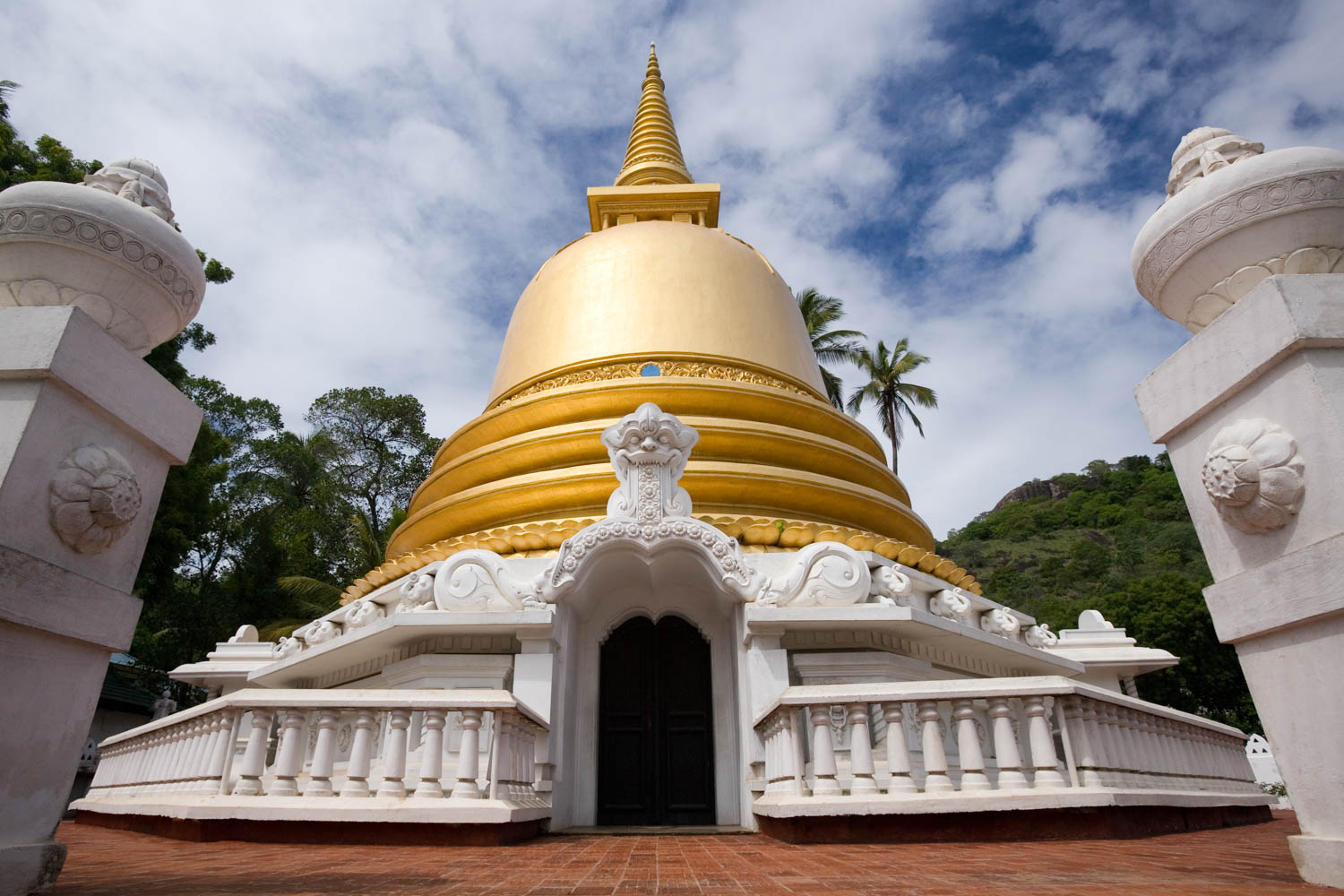
- Dambulla Cave Temple (roughly 20–25 min) — Five caves cut into a granite outcrop, painted wall to wall with Buddhist murals and packed with statues, some over a thousand years old. Fits comfortably into a morning combined with the drive back.
- Polonnaruwa (roughly 1 hour) — Sri Lanka's best-preserved medieval capital: a spread-out site of temples, statues and a royal palace, best covered by bicycle or tuk-tuk once you're there. Needs half a day on its own rather than tacking it onto Dambulla.
- Minneriya / Kaudulla safari (roughly 30–45 min) — A jeep safari into whichever park has the elephants that season (see below). Also good for birdlife and, less reliably, leopard and sloth bear sightings.
Day Trips from Sigiriya
🐘 Minneriya / Kaudulla (30–45 min): Jeep safari to whichever park has the elephant gathering that season.
🕌 Dambulla Cave Temple (20–25 min): Five painted rock caves, statues and murals spanning over a thousand years.
🏛️ Polonnaruwa (~1 hr): The best-preserved medieval capital in Sri Lanka, explored by bicycle or tuk-tuk.
🧗 Pidurangala (20–30 min): The steeper, cheaper, quieter alternative climb — and the view of Sigiriya rock itself.
🌲 Ritigala Forest Monastery (~45 min): A little-visited jungle-covered ruin, for travellers who want a Cultural Triangle site without the crowds.
The Minneriya Elephant Gathering
From around July through October, as the tanks and forest pools elsewhere in the dry zone shrink, wild elephants converge on the drying bed of the Minneriya reservoir to graze on the fresh grass it exposes — one of the largest gatherings of Asian elephants anywhere, with numbers reportedly running into the hundreds at the August–September peak.
The "gathering" isn't fixed to one park. As Minneriya's water recedes further into September and October, elephants are reported to shift toward neighbouring Kaudulla National Park, and later in the year toward Hurulu Eco Park. Outside the July–October window you can still safari at any of the three parks, just with smaller and less certain sightings. A safari is typically a shared or private jeep, roughly 3 hours, entering in the late afternoon when the heat drops and animals move to open ground.
Why come here
The reasons travellers book around this place.
Hiraz's take
Getting here
From Colombo airport (CMB), three good ways down the coast.
There's no railway station in Sigiriya itself — the nearest is at Habarana or Hingurakgoda, so a rail journey still ends with a tuk-tuk or taxi for the last stretch. Most visitors arrive by road instead:
From Colombo, it's roughly 170 km, which private-car estimates put at about 3 to 3.5 hours outside of Colombo's own traffic. From Bandaranaike International Airport, the drive is a little shorter and usually faster than from the city centre, since it skips Colombo's traffic — figure on roughly 2.5 to 3 hours. From Kandy, it's about 90 km and 1.5 to 2 hours on a reasonable road. Expressway buses and local buses connect Colombo and Kandy to Dambulla, from where a shorter local bus or tuk-tuk covers the last stretch to Sigiriya — cheaper, but slower and less predictable with luggage or hotel timing.
However you arrive, the last stretch is usually a short tuk-tuk or hotel pickup rather than a walk-in — Sigiriya village and the Habarana hotels are spread along quiet roads, not a single walkable strip. Tell your hotel your flight or bus arrival time and most will arrange the pickup directly.
Once you're there
How to move around once you have arrived.
Getting Around Once You're Here
The sights around Sigiriya are spread over 20–60 km — too far to walk or cycle between. A hired car or tuk-tuk with driver for the day is the standard way to reach Dambulla, Polonnaruwa and the safari parks. For short local hops — your hotel to the Pidurangala trailhead, or into Sigiriya village for dinner — a tuk-tuk is quick and available everywhere. Several guesthouses rent bicycles, which work well on the flat, quiet paddy-field roads if you want to reach Pidurangala under your own steam before the heat sets in.
Where to stay
Close in for the atmosphere, further out for the quiet.
Where to Stay, and How Many Nights
Two nights is the practical minimum: one to climb Sigiriya or Pidurangala (or both, back to back, starting the second before dawn), one to add a single day trip. Three nights is the comfortable version — it lets you split the climb, Dambulla, Polonnaruwa and a Minneriya safari across separate mornings instead of stacking early starts.
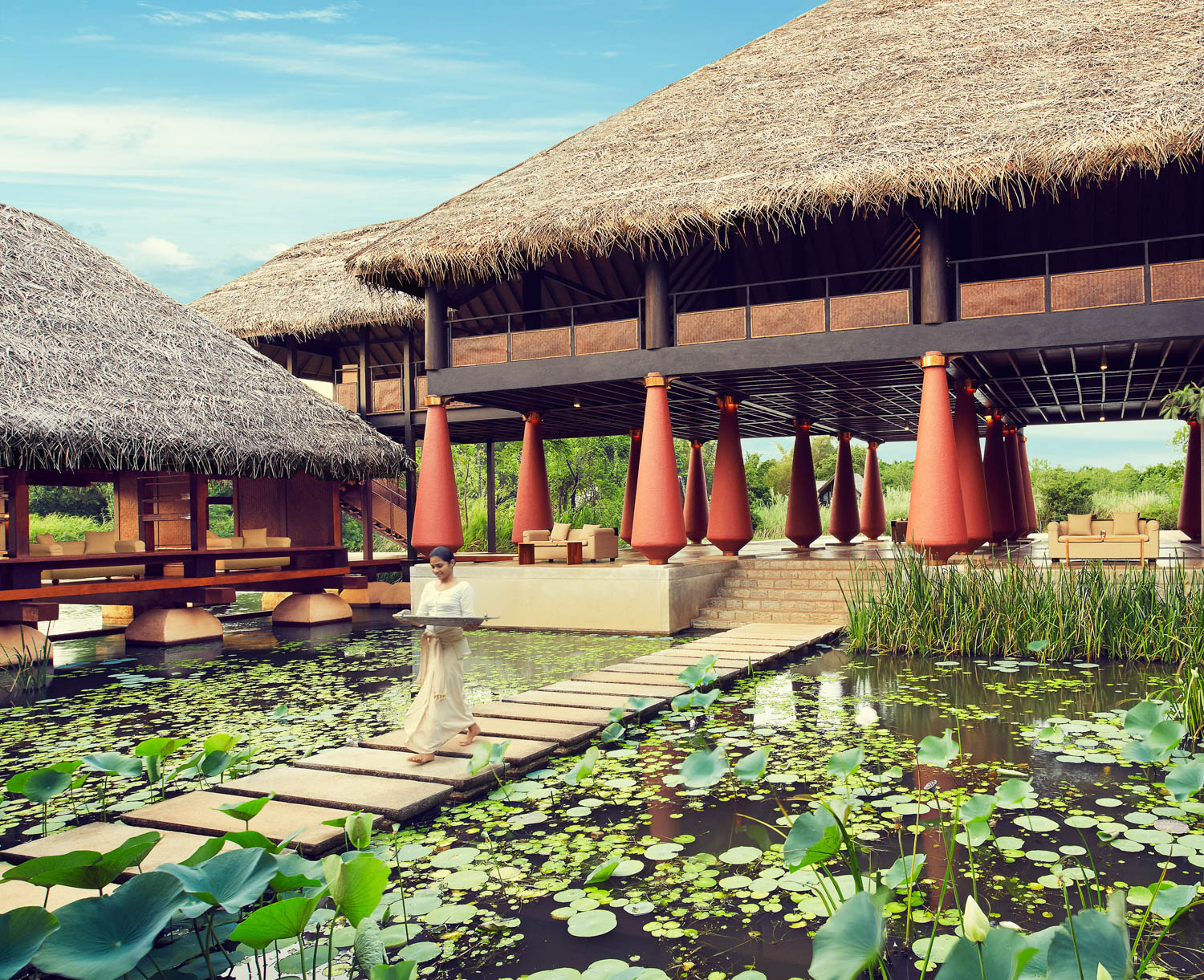
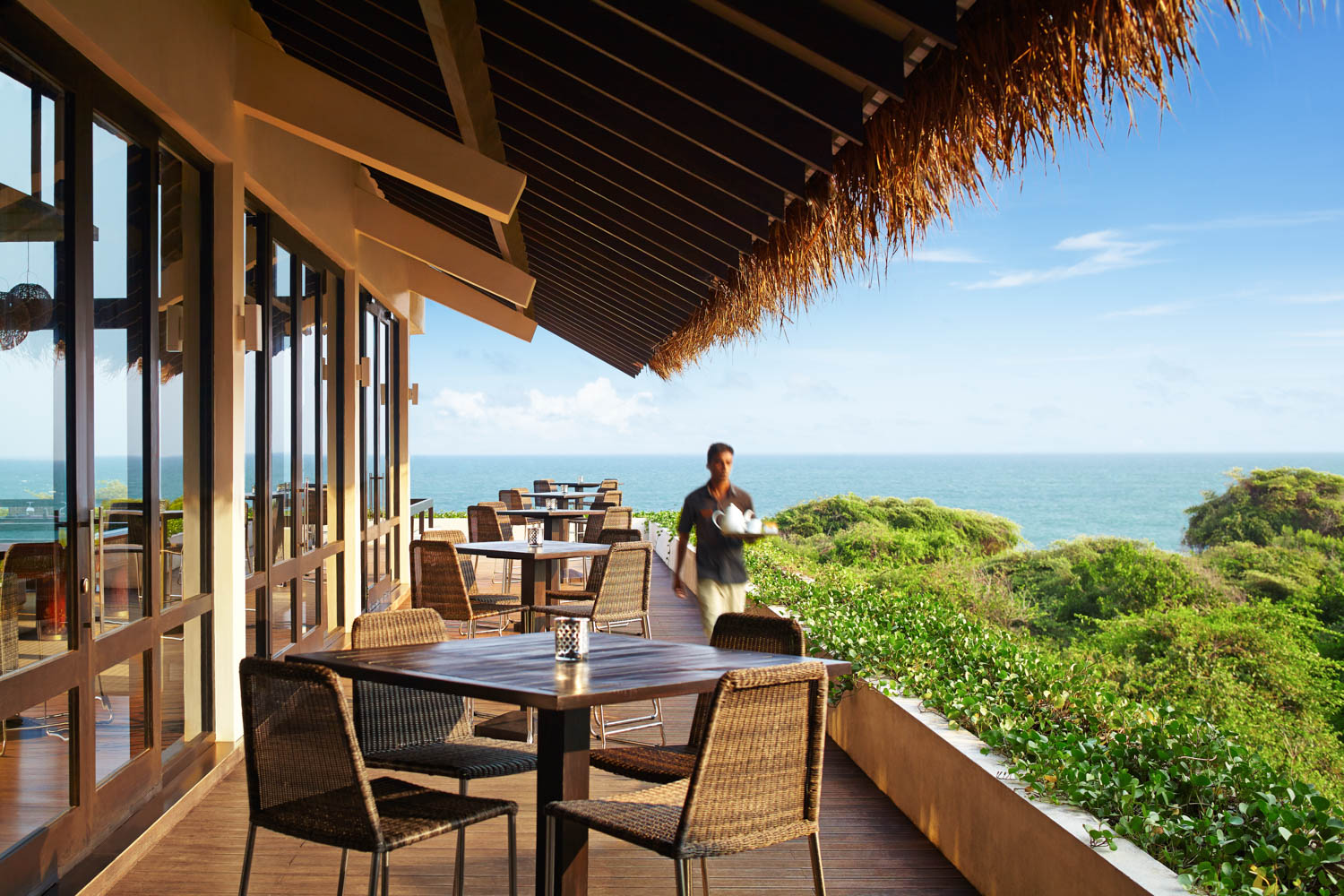
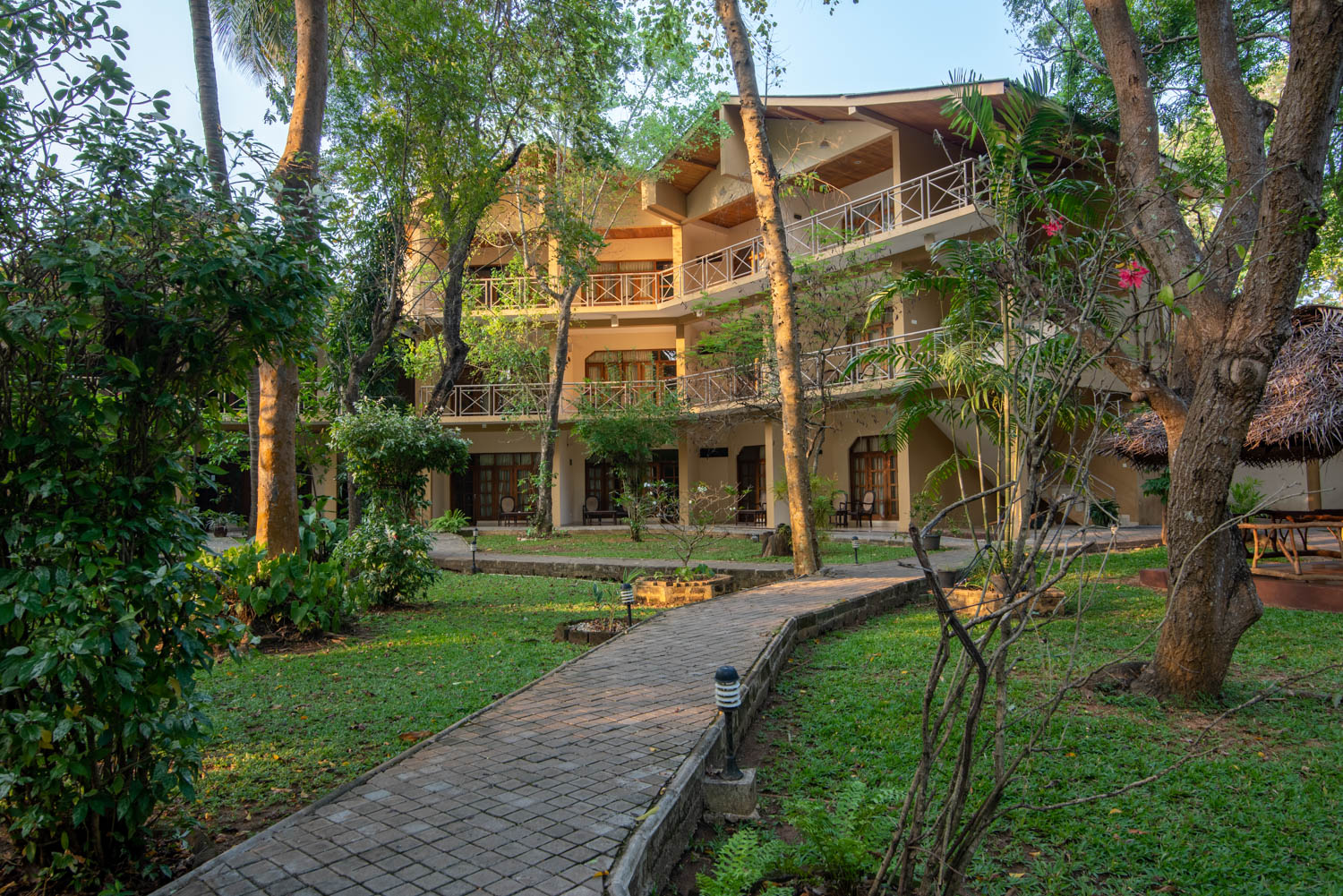
Sigiriya village puts you closest to the rock and to the Pidurangala trailhead, and it has the most restaurants of the three main options — useful if you don't want to eat every meal at your hotel. Habarana, a junction town 20–25 minutes away, has larger hotels with pools and sits closer to Minneriya and Kaudulla, which matters if an elephant safari is the priority and you want a shorter pre-dawn or late-afternoon drive to the park gate. Dambulla is the budget and public-transport option — better bus connections, but a thinner restaurant scene. Inamaluwa, the stretch of road between Sigiriya and Dambulla, is where the best-value homestays cluster, roughly equidistant from both. Kandalama, out toward the lake, is where the quieter, design-led resorts sit if you want the stay itself to be part of the experience.
Where to eat
Cafés, local kitchens, and a few worth the drive.
When to go
The dry, bright window and the months to sit out.
The most comfortable months to be based in Sigiriya are January to April, the dry season — daytime temperatures climb from a relatively bearable 29–31°C in January toward a hot 34–35°C by April, but rain is unlikely and the climbs and safari roads stay dry.
May through September is hotter and more humid, but it overlaps with the Minneriya elephant gathering (July–October, peaking August–September) — the trade-off most visitors make deliberately. October through December is the wettest stretch, with November typically the heaviest rain of the year; the climbs are more slippery and safari roads can flood. Whichever season, plan to be walking or climbing by mid-morning at the latest — the dry-zone heat builds fast and there's very little shade on any of the local climbs.
What it costs
Rough, honest per-person guides — we price the real thing to your dates.
Travel tips
The small things that make the difference here.
In frames
A gallery of the destination.
Common questions
Everything worth knowing before you go.
How many days do you need in Sigiriya?
Two nights is enough to climb Sigiriya or Pidurangala and add one day trip. Three nights is more comfortable if you also want Polonnaruwa and a Minneriya safari, since it spreads the early starts across separate mornings instead of stacking them back to back.
Is Pidurangala better than climbing Sigiriya rock?
Not better, different. Pidurangala is the cheaper, steeper, quieter climb, and it gives you the view of Sigiriya rock rising out of the jungle — the shot most people picture. Sigiriya itself gives you the frescoes, gardens and ruins, but no view of the rock. Many visitors do both.
Where should I stay — Sigiriya, Habarana or Dambulla?
Sigiriya village puts you closest to the rock and Pidurangala, with the most restaurants nearby. Habarana, 20–25 minutes away, has larger hotels and sits closer to the Minneriya and Kaudulla safari parks. Dambulla is the budget and public-transport option, with fewer places to eat in the evening.
Can I visit Dambulla and Polonnaruwa from Sigiriya as day trips?
Yes. Dambulla Cave Temple is about 20–25 minutes away and fits into a morning. Polonnaruwa is roughly an hour's drive and needs half a day on its own, best explored by bicycle or tuk-tuk once there, so most people treat it as its own day rather than combining both.
When is the Minneriya elephant gathering?
The gathering builds through July, peaks in August and September, and tails off into October, as the shrinking Minneriya reservoir exposes fresh grass that draws elephants from the surrounding forest. Outside those months you can still safari at Minneriya, Kaudulla or Hurulu Eco Park, just with smaller numbers.
How do I get to Sigiriya from Colombo or the airport?
By private car it's roughly 170 km and about 3 to 3.5 hours from Colombo, a little faster direct from the airport since you skip the city traffic. There's no train station at Sigiriya itself — the nearest is Habarana — so a private transfer is what we arrange for almost everyone.
What's the best time of year to visit Sigiriya?
January to April is the most reliable stretch — dry, hot, and before the heaviest rains. If seeing the Minneriya elephant gathering matters more than comfort, August and September are hotter but that's when elephant numbers peak, so most people pick their season based on which they'd rather trade off.
Sources and checked
Make it yours.
Tell us what pulls at you and we'll thread this journey into one private itinerary — sent back on a live link within 24 hours.