Sri Lanka Holiday from the UK 2026 — Complete Planning Guide
Written by the Sithiyam Travel team in Colombo
Planning a Sri Lanka holiday from the UK in 2026? Flights, visa, best time to visit, itineraries, and honest budget breakdown in GBP. Updated April 2026.
Why UK Travellers Love Sri Lanka
Why Sri Lanka is the Perfect Holiday for UK Travellers
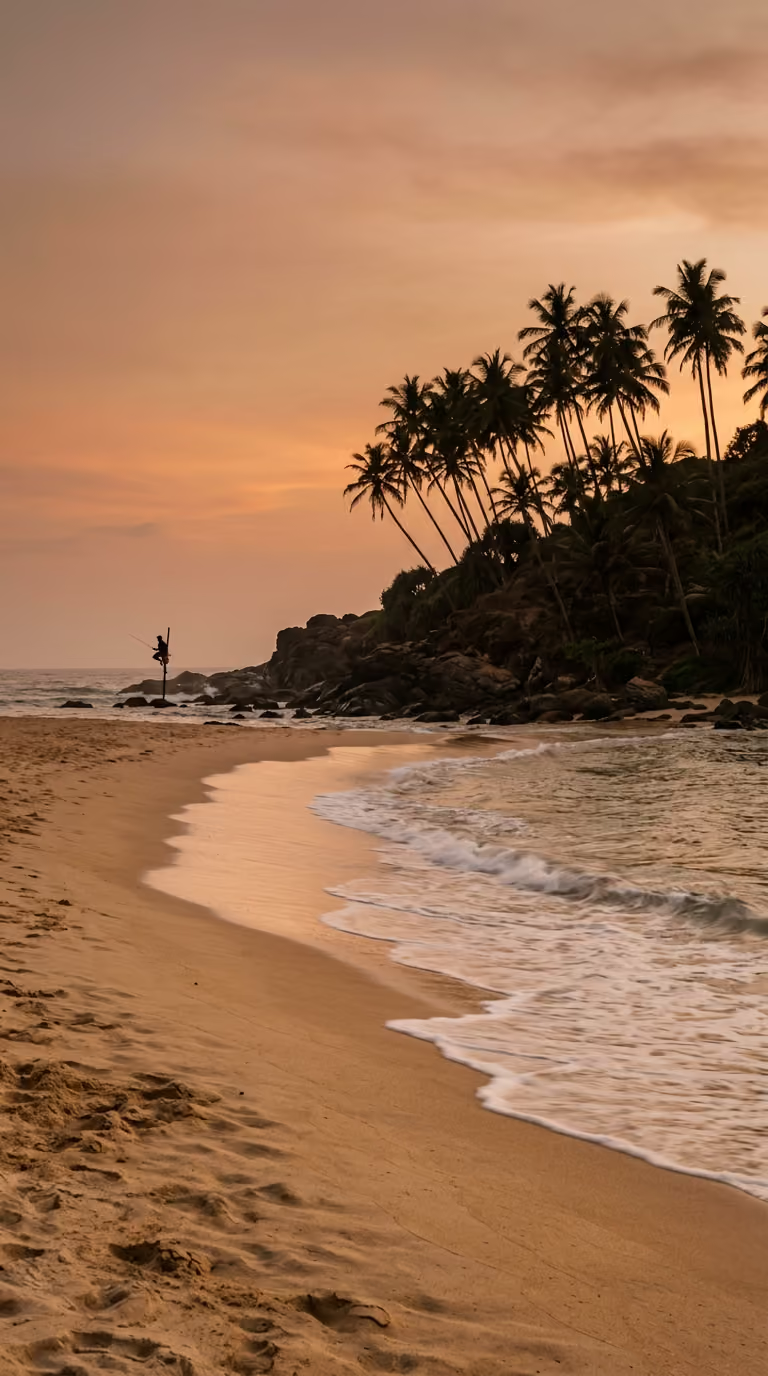
There's a reason Sri Lanka has been one of the UK's most popular long-haul destinations for years. A 10.5-hour direct flight from Heathrow, no language barrier, extraordinary value compared to the Maldives, and an island that manages to combine world-class beaches, leopard safaris, ancient ruins, misty tea highlands, and whale watching — all in one trip.
For British travellers, Sri Lanka makes particular sense:
- English everywhere: Sri Lanka was a British colony until 1948. English is an official language spoken throughout the tourism industry. You will never need a phrase book.
- Perfect winter escape: December through March is Sri Lanka's best season on the south and west coasts — exactly when UK weather is at its worst. A fortnight over Christmas or New Year means trading grey, wet Britain for 30°C sunshine, calm seas, and excellent food.
- Outstanding value vs. the Maldives: A comparable beach holiday in the Maldives costs four to five times more per day. Sri Lanka gives you beaches, wildlife safaris, and 2,000 years of history for the price of a single Maldives overwater villa stay.
- Manageable flight time: ~10.5 hours direct on SriLankan Airlines from Heathrow. An overnight flight means you land in the morning and can be by the pool in Galle by lunchtime. Far less gruelling than Australia, Canada, or the Caribbean in terms of travel time.
- Shared heritage and familiarity: The colonial history creates unexpected familiar touches — red post boxes, cricket culture, tea traditions, and colonial architecture in Galle Fort and Colombo that feels like history you already know.
Flights from the UK
Flights from the UK to Sri Lanka
Sri Lanka's international gateway is Bandaranaike International Airport (CMB) in Katunayake, 35km north of Colombo — connected to the city in 45–60 minutes by expressway.
Direct Flights
SriLankan Airlines operates the only non-stop service: London Heathrow (LHR) to Colombo (CMB). Flight time is approximately 10.5 hours outbound, 11 hours return. Daily departures. This is the most convenient option for UK travellers — no connection, no middle-of-the-night layover, no missed flights to stress about.
One-Stop Options (often better value)
- Emirates via Dubai (DXB) — From Heathrow, Gatwick, Manchester, Birmingham, Glasgow, Edinburgh. Total: ~12–14 hours. Often the best-value option for families and those travelling from outside London. Emirates Business Class on this routing is exceptional and regularly priced competitively.
- Qatar Airways via Doha (DOH) — From Heathrow, Manchester. Total: ~13–15 hours. Frequently the most competitive premium cabin pricing.
- Etihad via Abu Dhabi (AUH) — From Heathrow, Manchester. Similar times to Qatar routing.
- Singapore Airlines via Singapore (SIN) — From Heathrow. Slightly longer but excellent if you want a Singapore stopover.
Realistic Prices (Round-Trip from UK, 2026)
Economy class: £500–750 booked 3–4 months ahead; £800–1,200 average peak season; £1,300+ last-minute or Christmas period.
Business class: £1,800–3,500+ depending on airline. Emirates Business via Dubai is a consistent favourite among UK travellers spending a little extra for the comfort on this routing.
Tip: December and January departures (peak UK winter escape season) are the most expensive. March offers almost identical weather with 20–30% lower flight prices and thinner crowds at all hotels and attractions.
Best Time to Visit
Best Time to Visit Sri Lanka from the UK
Sri Lanka's seasons align well with UK travel patterns — both for winter escapes and summer school holidays.
December to March — Classic UK Winter Escape
The south and west coasts (Galle, Mirissa, Weligama, Unawatuna, Hikkaduwa) are in full dry season: 28–32°C, sunny, calm seas. This is the sweet spot for British travellers — leave grey January behind and land in tropical summer. The hill country (Ella, Nuwara Eliya) is also excellent in this window: clear blue days, cooler highland temperatures (18–22°C), and stunning tea landscapes.
Note on crowds and prices: This is peak season. Christmas and New Year are especially busy — book accommodation 3–4 months ahead for popular Galle Fort boutique hotels and Yala lodges.
July to August — UK School Holiday Alignment
UK school summer holidays align with Sri Lanka's east coast dry season. Arugam Bay, Pasikuda Beach, and Trincomalee are at their absolute best — dry, sunny, and warm, with turquoise flat-calm seas. The south coast is in monsoon season during this window, so route your trip around the east coast and Cultural Triangle (which is unaffected by either monsoon).
April — Shoulder Season Value
After the Easter rush, April offers solid south coast weather (dry season tapering off but largely still good), noticeably lower prices, and far fewer tourists than January–March. The Sinhala and Tamil New Year (April 14) is a significant cultural festival worth experiencing if your dates align.
October–November — Transitional Value Window
Between the two monsoons. Some rain on the south coast, but often long sunny spells. Prices drop 20–30% vs. peak season. An excellent window for couples and independent travellers seeking value without compromising on quality — the hill country and Cultural Triangle are excellent year-round.
Complete seasonal breakdown: month-by-month Sri Lanka weather and seasons guide.
Visa & Budget in GBP
Sri Lanka Visa for UK Passport Holders
UK citizens require an Electronic Travel Authorisation (ETA) to enter Sri Lanka. It is applied for online and takes approximately 5 minutes:
- Type: ETA — tourist double-entry visa
- Cost: Free. Since 25 May 2026 the UK is one of 40 countries whose citizens get the 30-day tourist ETA free of charge; you still apply online before you fly.
- Validity: 6 months from issue date; up to 30 days per entry (extendable in-country to 90 days)
- Processing: Usually instant; allow 72 hours before travel to be safe
- Apply at: eta.gov.lk — the official Sri Lankan government portal only. Ignore third-party visa services that charge fees for an ETA that is now free.
Full walkthrough: Sri Lanka tourist visa guide 2026.
Sri Lanka Holiday Cost Guide — Budget in GBP
Budget: £60–100/day per person
Simple guesthouses: £20–35/night. Local restaurants: £4–12/meal. Tuk-tuk transport: £4–12/day. Entry fees: £15–25/day. 14-day total excluding flights: ~£850–1,400 per person.
Mid-Range: £150–250/day per person
Boutique hotels and quality guesthouses: £60–120/night. Restaurant dining: £15–35/meal. Private driver-guide (shared): £25–35/person/day. Safari lodge at Yala: £120–200/night. 14-day total excluding flights: ~£2,100–3,500 per person.
Luxury: £350+/day per person
Sri Lanka's luxury tier rivals the Maldives, Mauritius, and Seychelles — at a fraction of the cost. Cape Weligama, Amanwella, The Fortress Resort, and Galle Fort's finest boutique hotels all compete with the best in the Indian Ocean. Budget £300–700+/night at top properties. 14-day total excluding flights: ~£5,000–10,000+ per person.
Maldives comparison: A 7-night overwater villa package from the UK typically costs £4,000–8,000 per person (flights + accommodation). The same budget gives you a 14-day Sri Lanka holiday with considerably more variety of experiences.
10-Day Itinerary
Sri Lanka Itineraries for UK Travellers
10-Day Sri Lanka Holiday — The Classic Route
Best for: Couples and first-timers wanting the highlights without three weeks off work.
Days 1–2: Galle and the South Coast
Overnight flight from the UK, land at CMB in the morning, transfer to Galle Fort (2.5 hours south). Two nights in or around Galle — walk the Dutch ramparts, explore the UNESCO World Heritage fort, and eat well (Galle has some of Sri Lanka's best restaurants).
Days 3–4: Mirissa and the West Coast
Early morning whale watching boat from Mirissa (December–March: reliable blue whale sightings). Weligama Beach for surfing and swimming. Hiriketiya for a quieter, more sheltered cove.
Days 5–6: Yala National Park
Drive east to Yala. Two days, four safari sessions — the highest leopard density of any national park in the world, plus elephants, sloth bears, crocodiles, and exceptional birding. Stay at a safari camp inside or near the park.
Days 7–8: Ella and the Hill Country
Drive up to the highlands. Nine Arch Bridge, Little Adam's Peak hike (45 minutes, panoramic views), tea factory tour, and the famous scenic train through the tea estates.
Days 9–10: Kandy and Home
Temple of the Tooth Relic, Royal Botanic Gardens, traditional Kandyan dance performance. Train or drive to Colombo, overnight flight back to the UK.
14 & 21-Day Itineraries
14-Day Sri Lanka Holiday — The Most Popular Choice
14 days is what most British travellers choose for their first Sri Lanka trip. The 10-day route above, plus four days in the Cultural Triangle at the start.
Days 1–2: Colombo — Two nights in the capital. Dutch Hospital dining district, Pettah market, the National Museum, and Galle Face promenade. Ministry of Crab for dinner — one of Asia's 50 Best restaurants and an institution for visiting British food lovers.
Days 3–5: Cultural Triangle — Sigiriya Rock Fortress (a 5th-century royal citadel atop a 200-metre volcanic plug — Sri Lanka's most dramatic sight), Dambulla Cave Temple (UNESCO, 150+ gilded Buddha statues), and Polonnaruwa (one of Asia's most intact medieval capitals).
Days 6–7: Kandy — The Temple of the Tooth Relic, the Botanic Gardens, and the Kandyan dance performance. The hill country train from Kandy station is one of the world's great rail journeys.
Days 8–9: Ella — Nine Arch Bridge, Little Adam's Peak, Ella Gap viewpoint, tea factory.
Days 10–11: Yala — Two days, four safari sessions. Leopards are the headline, but the elephant herds and birding are equally spectacular.
Days 12–14: South Coast — Galle Fort, whale watching from Mirissa (in season), beach time at Weligama or Unawatuna. Overnight flight from Colombo back to the UK.
21-Day Sri Lanka Holiday — The Full Island Experience
Three weeks allows you to explore properly without rushing, adding Sri Lanka's less-visited north and east coast into the mix:
- Days 1–3: Colombo and day trips (Negombo, Kalpitiya)
- Days 4–7: Cultural Triangle in depth (Anuradhapura, Sigiriya, Dambulla, Polonnaruwa, Minneriya elephant gathering)
- Days 8–9: Jaffna — Sri Lanka's northern Tamil cultural capital, with Dutch forts, Hindu temples, and the country's most distinctive cuisine
- Days 10–12: East coast (Trincomalee and whale watching, or Arugam Bay surfing — June–September season)
- Days 13–14: Kandy
- Days 15–16: Ella and hill country
- Days 17–18: Yala National Park
- Days 19–21: South coast wind-down (Galle, Mirissa, Weligama) before the overnight flight home
Package vs. Tailor-Made
Package Holidays vs. Tailor-Made: What's Right for You?
Most UK travellers book Sri Lanka one of two ways: an ATOL-protected package through a high street or online UK operator, or a tailored trip through a Sri Lanka specialist. Here's the honest comparison:
UK Package Holidays
What you get: ATOL financial protection, straightforward all-in pricing, and a familiar booking experience. A single point of contact if things go wrong.
The trade-offs: Standardised itineraries optimised for ease of operation rather than quality of experience. You'll typically stay at larger resort hotels rather than the genuine boutique properties that make Sri Lanka special. Less flexibility to adjust the pace, route, or activities. A UK operator margin is built into the price.
Tailor-Made Through a Sri Lanka Specialist DMC
What you get: A completely personalised holiday built around your travel style, interests, budget, and exact dates. Access to smaller boutique hotels, private vehicles, and local guides who know the country intimately. The itinerary is yours, not a fixed group route.
The trade-offs: No ATOL protection (though reputable DMCs carry comprehensive travel industry bonding). Requires a bit more research to identify a trustworthy operator.
For most British travellers visiting Sri Lanka for the first time, a specialist DMC — particularly one based in Sri Lanka rather than the UK — will deliver a significantly better experience than a package operator, and often at a lower total cost (no UK agency mark-up, direct relationships with properties and guides).
See our Sri Lanka holiday packages to understand what a tailor-made trip looks like at different budget levels.
Plan Your Holiday
Plan Your Sri Lanka Holiday from the UK with Sithiyam
Sri Lanka has earned its place as one of the UK's most-loved long-haul destinations — and it's not hard to see why. The combination of a manageable 10.5-hour flight, English spoken everywhere, extraordinary value compared to the Maldives and Mauritius, and genuine diversity of experience in a compact island makes it one of the best long-haul holidays available to British travellers.
December through March remains the classic UK window — trading grey British winter for 10–21 days of sunshine on the south coast. But Sri Lanka's year-round usability (east coast in July–August for school holidays, hill country any time, Cultural Triangle all year) means there's an excellent trip to be had in virtually any month.
At Sithiyam, we build every Sri Lanka holiday from scratch around the traveller — not around a pre-packaged group itinerary. Private vehicle, handpicked accommodation, expert local guide, and a team based in Sri Lanka (not a UK call centre). We know the island, the properties, and the best guides personally.
Browse our Sri Lanka holiday packages for UK travellers — priced transparently in GBP, tailor-made to your dates, and built around what you actually want to do. Or explore all Sri Lanka packages to see what's possible at your budget.
Make it yours.
Tell us what pulls at you and we'll thread this journey into one private itinerary — sent back on a live link within 24 hours.