Pettah Market
Written by the Sithiyam Travel team in Colombo
 Sri Lanka
Overview
What makes this place worth the journey.
What Pettah Market Actually Is
Pettah is Colombo's main wholesale and retail bazaar district — not a single market building, but dozens of streets packed with small shops and stalls, each street generally specialising in one type of goods. It is loud, hot, crowded and, in the narrower lanes, genuinely difficult to move through at busy times. If you come expecting a curated, tourist-friendly market experience, recalibrate: Pettah wasn't built for visitors and it doesn't perform for them. That's also exactly why it's worth seeing — it's the most unfiltered look at how ordinary Colombo shops and trades.
Is Pettah Market Safe? The Pickpocket Question
Be straightforward about this one: Pettah is repeatedly named, in traveller reviews and safety guides alike, as one of Colombo's known pickpocket areas. The density of the crowds is the reason — narrow lanes packed shoulder to shoulder make it easy for someone to work a bag or pocket without being noticed. This isn't a reason to skip Pettah, but it is a reason to change how you carry things while you're there.
Practical measures that actually help: wear a crossbody bag zipped shut and worn in front of your body, not a backpack on your back where you can't see it. Keep your phone in a front pocket or zipped bag, not a back pocket, and don't have it out unless you're actively using it. Leave anything you don't need — spare cards, jewellery, a second phone — at your hotel. Carry cash split between two places rather than one wallet. None of this is exotic advice; it's the same crowd-safety approach that applies to any dense market anywhere in the world, and it's enough to make Pettah low-risk rather than no-risk.
The Heat and the Crowds
This is the other honest point: Pettah is genuinely tiring. There is very little shade, the lanes trap heat and exhaust from the surrounding traffic, and by mid-morning on a weekday it can be shoulder-to-shoulder in the narrower streets. It is not a relaxed stroll. Visitors who go in expecting an easy, breezy market wander tend to come out exhausted and slightly rattled; visitors who go in expecting exactly what it is — a working, chaotic bazaar — tend to enjoy it a lot more. Bring water, wear light clothing, and plan for a couple of hours rather than a full day.
What to Buy in Pettah
Pettah is organised by street and by trade, which is the easiest way to navigate it. Sea Street is the gold and jewellery street — rows of jewellers, mostly Tamil-owned, selling gold that locals genuinely come from across the city to buy. Other streets specialise in fabric and textiles, spices, electronics, plastics, clothing and general household goods. If you want souvenirs specifically — sarongs, spices, tea, small handicrafts — you can find them here at prices well below what a tourist-facing shop elsewhere in Colombo would charge, but bargaining is expected and quality varies, so check goods before paying.
When to Go
Go on a weekday morning. That's the single most useful piece of timing advice: the market is at its freshest and least crowded early, before the heat and the day's full crowd build up. Avoid Sundays and Poya days (the full moon public holidays) — most wholesale shops and around 80% of retail shops close, so you'll find a market that's mostly shuttered rather than the full bazaar experience. Weekends generally are busier and more chaotic than weekdays, which cuts against Pettah in either direction: quieter on Sunday because it's closed, busiest and most overwhelming on Saturday.
Is Pettah Worth Visiting?
If you want an easy, comfortable market experience, Pettah isn't it — go to a curated craft market instead. If you want to see the actual commercial engine of Colombo, unpolished and running at full speed, Pettah delivers something few other Sri Lankan attractions do. It rewards a couple of focused hours on a weekday morning, sensible bag discipline, and low expectations for personal space.
Is it worth it?
Including who should skip it.
What to do
What the visit is actually made of.
What to Look For
- Sea Street — a full street of gold and jewellery shops, one of the highest concentrations of jewellers in Sri Lanka.
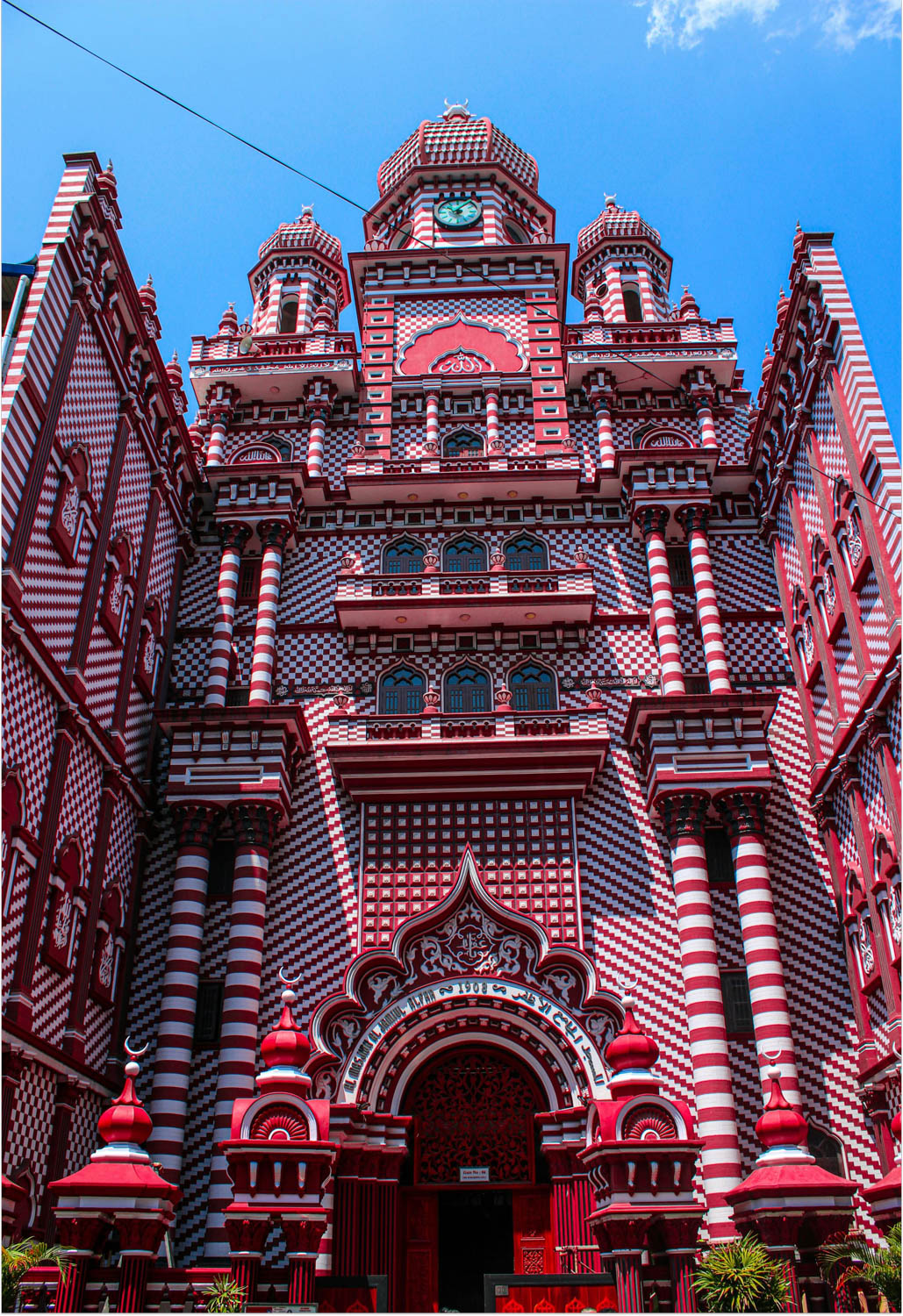
- Jami Ul-Alfar Mosque (the Red Mosque) — a candy-striped red-and-white mosque built in 1908, one of Colombo's most photographed buildings, sitting right at the market's edge.
- Trade-specific streets — individual lanes given over almost entirely to one product: textiles, spices, electronics, plastics.
- The general chaos — handcarts, delivery trucks and pedestrians sharing the same narrow lanes; it's part of what makes Pettah Pettah.
Why come here
The reasons travellers book around this place.
History of Pettah Market
Pettah — the name comes from the Tamil pettai, meaning "town outside a fort" — has been Colombo's trading district since the colonial period, when the Dutch and later the British used it as the commercial belt just outside the fortified centre. It grew organically rather than being planned, and that history is still visible today: individual streets specialise in a single trade, a pattern that dates back generations rather than being a modern tourist arrangement.
Sea Street became, and remains, the city's gold and jewellery street, historically run by Colombo's Tamil merchant community. Other streets became dedicated to textiles, hardware, spices, or electronics, and that specialisation is why locals still navigate Pettah street by street rather than shop by shop.
Pettah is not a market built for visitors. It functions as a wholesale and retail engine for the whole city — small traders from across Sri Lanka come here to stock up — and that working character, rather than any curated tourist experience, is what makes it worth seeing.
Hiraz's take
Getting here
Every realistic way in, with times and fares.
Getting to Pettah Market
Pettah sits right next to Colombo Fort, and Colombo Fort Railway Station is within a short walk of the market's edge, making the train a genuinely practical option if you're already using Sri Lanka's rail network. From most central Colombo hotels, a tuk-tuk or taxi takes roughly 10–15 minutes depending on traffic.
Once inside Pettah, the market is entirely on foot — the streets are too narrow and crowded for vehicles in most stretches, so don't plan to have a driver take you street to street. Wear shoes you don't mind getting dusty; the ground is uneven in places.
Travel tips
The small things nobody tells you until you are there.
- Zipped crossbody bag, worn in front
- Cash split between two places, not one wallet
- Water bottle
- Modest clothing (long trousers/covered shoulders) if visiting the Red Mosque
- Comfortable, closed shoes for uneven ground
- Leave spare valuables at the hotel
Travel Tips
✔️ Wear a zipped crossbody bag in front of your body — not a backpack you can't see.
✔️ Keep your phone put away and out of back pockets; only bring it out when you need it.
✔️ Leave spare cards, jewellery and anything you don't need to carry at your hotel.
✔️ Go on a weekday morning — Sundays and Poya days see most shops shut, and Saturdays are the most crowded.
✔️ Bring water and expect heat with very little shade; plan two to three hours, not a full day.
✔️ Check goods before paying, especially on Sea Street — bargaining is expected everywhere.
✔️ If you want the Red Mosque, dress modestly in advance so you're not caught out at the entrance.
✔️ Don't expect a relaxed browse — Pettah is a working market, not a tourist-paced one.
When to go
The dry, bright window and the months to sit out.
A Pettah Morning, in Order
- 08:30–09:00 — Arrive as early as you can manage; the market is freshest and least crowded first thing.
- 09:00–10:00 — Start on Sea Street for gold and jewellery, even just to look — the density of jewellers on one street is worth seeing regardless of whether you buy.
- 10:00–11:00 — Move into the fabric, spice and general-goods streets. This is where the crowding builds fastest, so keep bag discipline up.
- 11:00 — Visit the Jami Ul-Alfar (Red) Mosque at the edge of the market — the striped red-and-white building is one of Colombo's most recognisable landmarks and welcomes visitors with a guide, outside prayer times.
- By midday — Head out before the heat and crowds peak; Pettah is not a lunchtime-onward destination for most visitors.
Pair it with
Worth combining into the same day.
-2.jpeg)
On our routes
In frames
A closer look, frame by frame.
Where to stay
Places we actually put people, at three budgets.
.jpeg)


Common questions
Taken from what people actually search for.
Is Pettah Market safe for tourists?
It is generally safe during the day, but it is a known pickpocket area because of how crowded the narrow lanes get. Wear a zipped crossbody bag in front of your body, keep your phone away, and leave spare valuables at your hotel.
What is the best time to visit Pettah Market?
Early on a weekday morning, when it is freshest and least crowded. Avoid Sundays and Poya (full moon) days, when most shops are shut, and expect Saturdays to be the busiest and most chaotic.
What can you buy at Pettah Market?
Gold and jewellery on Sea Street, plus fabric, spices, electronics, clothing and household goods on other trade-specific streets, generally at prices well below tourist-facing shops elsewhere in Colombo.
Is Pettah Market open on Sundays?
Mostly no. Wholesale shops and around 80% of retail and textile stores close on Sundays, along with Poya public holidays, so you will find a largely shuttered market rather than the full bazaar.
How crowded and hot is Pettah Market?
Very. The narrow lanes trap heat with little shade, and by mid-morning on a weekday it can be shoulder-to-shoulder in busier streets. Plan two to three focused hours, not a leisurely full-day wander.
What is the Red Mosque near Pettah Market?
It is the Jami Ul-Alfar Mosque, a red-and-white striped landmark built in 1908 at the edge of the market. It is open to visitors with a guide outside prayer times, and modest dress is required.
How do you get to Pettah Market?
It is next to Colombo Fort, within walking distance of Colombo Fort Railway Station, or a 10–15 minute tuk-tuk or taxi ride from most central Colombo hotels.
Sources and last checked
Make it yours.
Tell us what pulls at you and we'll thread this journey into one private itinerary — sent back on a live link within 24 hours.
See Pettah the Way Locals Do
We include Pettah Market in Colombo itineraries with a driver-guide who knows which streets are worth your time, times the visit for a calmer morning, and stays with you through the busiest lanes so you can shop without worrying about your bag. No set tour bus route, no rushed pass-through. Message us on WhatsApp to build Pettah into your Sri Lanka trip.